

Automated patient texting for clinics: check-ins and refills without the busywork
Automate welcome texts, weekly check-ins, and running-low reminders with clinic-approved copy. Patients reply by text. Staff step in when someone needs a person.

· 4 min read · Updated
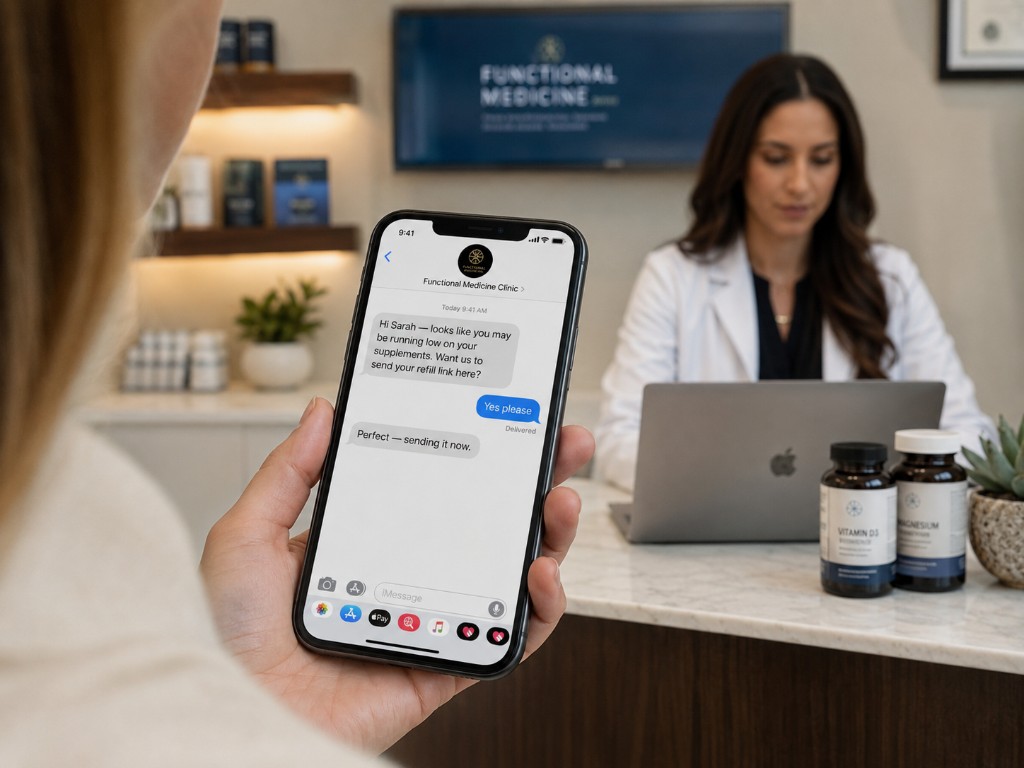
A lot of clinic texting is repetitive.
Someone sends the same check-in every week.
Someone remembers that a patient is probably running low.
Someone follows up because they never heard back.
None of those tasks are especially difficult.
They are just easy to forget when the clinic gets busy.
That is where automated patient texting is useful.
Not because a chatbot needs to talk to patients.
Because the same simple messages should not depend on a coordinator remembering to type them every time.
Automate the messages you already send
Start with the obvious ones.
A welcome message after the patient starts.
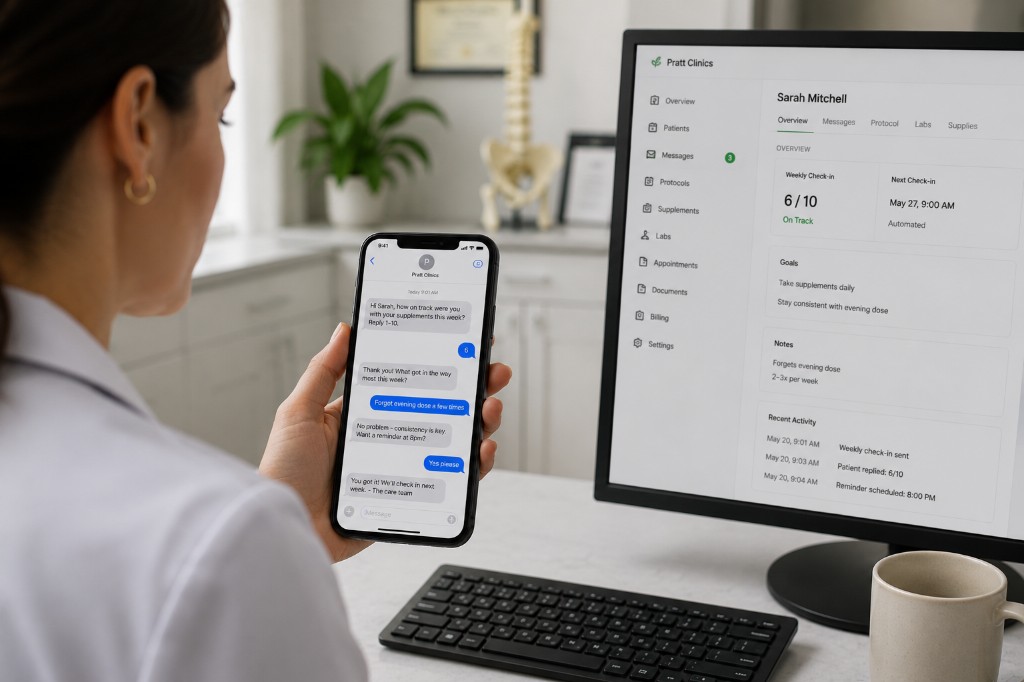
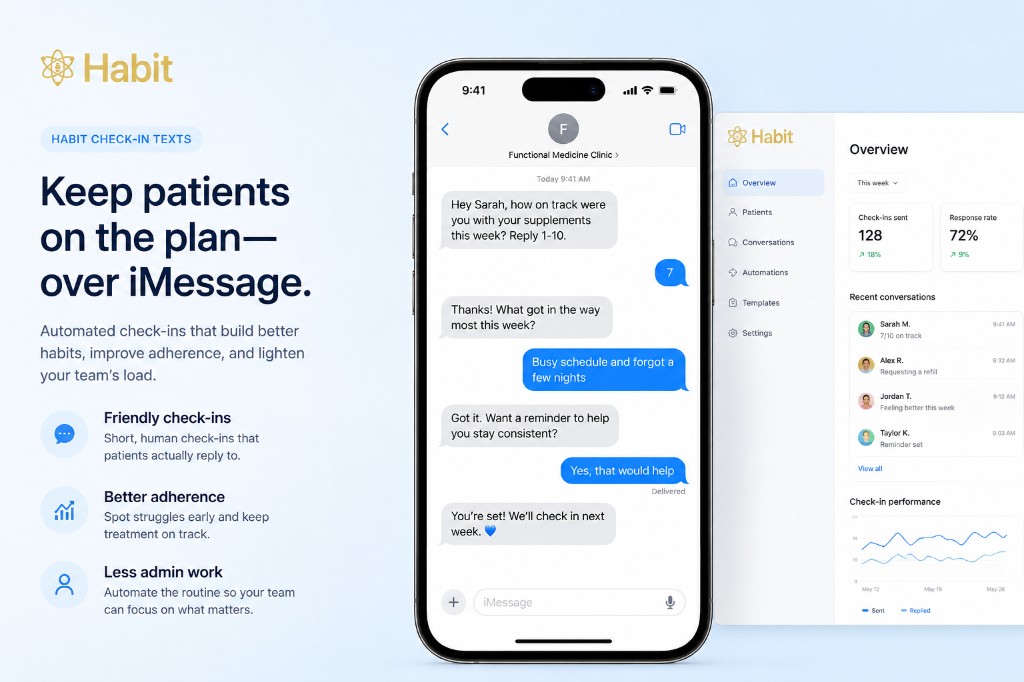
A weekly check-in.
A running-low reminder.
A short follow-up if someone has gone quiet.
The clinic writes the messages.
The clinic decides when they should go out.
Then the routine happens automatically.
That is enough for a lot of between-visit follow-up.
Check-ins should feel like check-ins
A good automated message should not sound like automation.
Instead of:
“Please complete your weekly treatment adherence assessment.”
send:
“How are you doing with the plan this week?”
That is much easier to answer.
A patient might say:
“Doing well.”
“I keep forgetting the evening dose.”
“I still haven’t done my labs.”
“I stopped one of the supplements.”
Now the clinic knows something it would otherwise have learned weeks later.
The value is not the reminder itself.
It is the reply.
Refills are another easy thing to automate
If the clinic knows roughly when someone should be running low, there is no reason to wait until the patient is completely out.
Send a short message first.
“Getting low on anything?”
If they need a refill, send the correct store or dispensary link.
That keeps the process simple for the patient and saves staff from making another round of calls.
It also catches the refill before the patient goes somewhere else because that was easier.
Staff should not have to watch every patient manually
This is where automation actually saves time.
The clinic does not need somebody scanning a spreadsheet every morning asking:
Who needs a check-in?
Who is due for a refill?
Who never replied?
The system can handle those repetitive triggers.
Then staff can focus on the patients who actually need attention.
Someone says everything is fine?
Nothing to do.
Someone says they stopped the plan?
Now a person can step in.
Someone has a refill problem?
Staff can handle it.
Someone mentions something clinical?
Route it appropriately.
That is a much better use of human time.
Patients should not need another app
For simple follow-up, asking patients to download something new creates unnecessary friction.
They already know how to text.
The message shows up.
They reply.
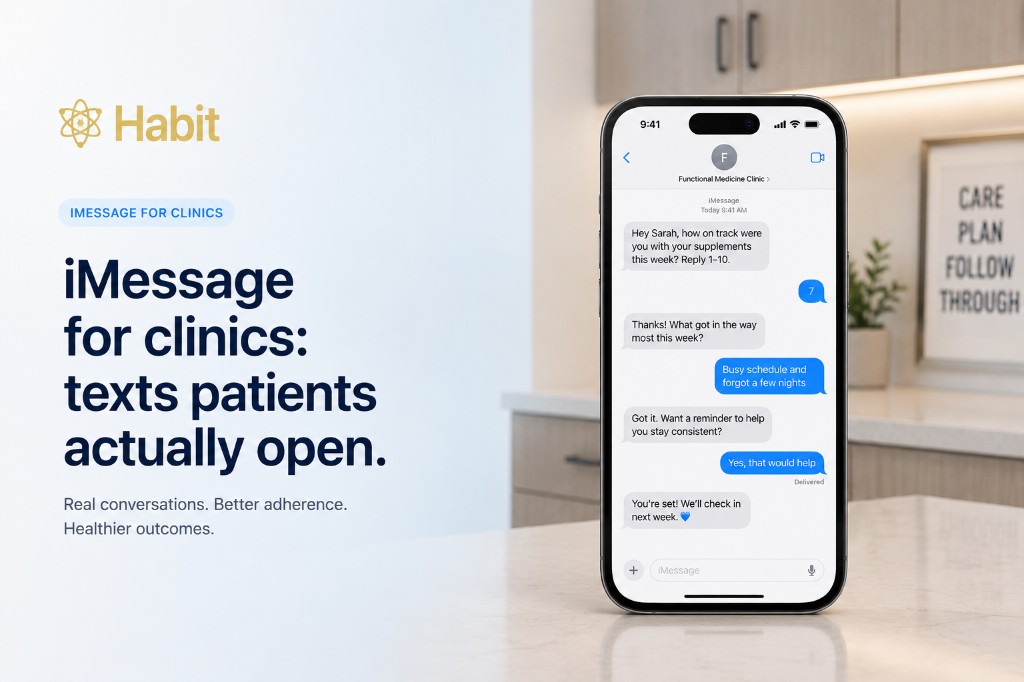
On supported Apple devices, that may appear through iMessage.
Otherwise, it can continue over SMS.
The patient should not need to care which system is doing the work underneath.
From their perspective, they are just texting the clinic.
Automation should not make clinical decisions
There is an important limit.
The system can ask the question.
It should not decide what the patient should do medically.
It can send:
“How are you feeling this week?”
It should not independently change a treatment plan based on the answer.
If a reply needs clinical judgment, a person takes over.
That keeps the repetitive part automated without pretending the repetitive part is the same thing as care.
Generic reminders are not the whole answer
Simply sending more messages does not automatically improve follow-through.
Patients can ignore automated texts just as easily as they ignore portal notifications.
That is why the message still has to be useful.
A one-way reminder saying:
“Remember to stay on your plan!”
does not tell the clinic much.
A message asking:
“Anything getting in the way this week?”
can.
Automation works best when it starts a useful conversation instead of just creating another notification.
Keep the setup simple
You do not need twenty automated workflows.
Start with three.
Welcome: Tell the patient what to expect.
Check-in: Ask one useful question each week.
Running low: Reach out before a refill becomes urgent.
Then add more only if the clinic actually needs them.
The whole point is to reduce complexity, not create another system staff have to babysit.
Good automation disappears into the background
The patient should not feel like they are talking to software.
The staff should not feel like they are managing a campaign.
The messages simply go out when they are supposed to.
Patients answer.
Staff see the replies that matter.
And nobody has to spend Tuesday morning typing the same check-in 80 times.
That is what automated patient texting should do.
Not replace the clinic.
Just handle the repetition.
Common questions
- What patient texts should clinics automate first?
- Start with three: a welcome after the patient starts, a weekly check-in with one useful question, and a running-low reminder before a refill becomes urgent. Add more only if the clinic actually needs them.
- Should automated texts make clinical decisions?
- No. The system can ask the question. It should not independently change a treatment plan. If a reply needs clinical judgment, a person takes over.
- Do patients need an app for automated clinic texts?
- No. They already know how to text. On supported Apple devices that may appear through iMessage. Otherwise it can continue over SMS.
- Why are generic reminders not enough?
- Patients ignore one-way blasts as easily as portal notifications. A message that asks what is getting in the way starts a useful conversation. A remember-to-stay-on-your-plan reminder does not tell the clinic much.
We cite public sources in the text where it matters. For operations and finance context only, not clinical, legal, or investment advice.
Keep reading
Patient texting
Automated patient follow-up without patient-facing AI
Automate welcome texts, weekly check-ins, and running-low reminders with clinic-approved copy. No chatbot. Staff step in when a reply needs a person.
· 4 min read
ekco
ekco check-in texts: keep patients on the plan between visits
Clinic-approved welcome, weekly check-in, and running-low texts on a schedule. Patients reply in the same thread. Staff step in when someone needs a person.
· 4 min read
iMessage
iMessage for clinics: a more natural way to text patients
Patients already use Messages all day. A clinic number they recognize beats short codes and portal notifications. iMessage when supported, SMS when not.
· 4 min read
See it on your patients.
Two weeks free on your real patients. ekco texts on an Echo-issued number. Patients reply on iMessage.